Diary
| Site: | DBECloud |
| Course: | Grade 10 e-Hospitality Studies |
| Book: | Diary |
| Printed by: | Guest user |
| Date: | Thursday, 22 October 2026, 10:55 AM |
1. Introduction
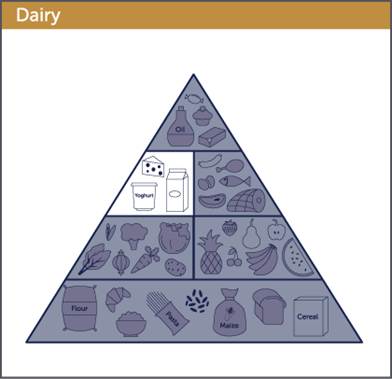
Dairy products are produced from the milk of buffaloes, camels, cattle, goats and sheep. Consumed worldwide, dairy products are a good source of protein and minerals. Depending on the processing that takes place, dairy products can be broken down into the following categories: butter, cheese, cream, cultured dairy and milk products.
2. Classification of diary
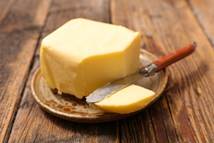
1. Butter: Fat, produced from churned fresh cream, can be used as a shortening, for spreading, greasing and cooking. Varieties include unsalted (sweet), salted and clarified (ghee) butter.
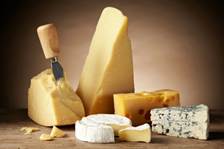
2. Cheese is made from the milk solids (curds) that come after milk curdles. After processing, cheese can be aged and cured in a number of ways.
- Fresh cheeses are moist and mild tasting (e.g. ricotta, cottage cheese).
- Blue cheeses are soft, cultivated using penicillin (e.g. Roquefort, Stilton and Gorgonzola).
- Soft or rind-ripened cheeses are soft beneath a slightly harder outer crust (e.g. Brie or Camembert).
- Semi-soft cheeses are more solid, normally air sealed (e.g. Gouda)
- Hard cheese, have been aged for periods of time (e.g. Cheddar and grating cheeses, Parmesan or Romano).
Cheese can be served on its own or as an extra ingredient in a dish. Man made, processed cheese, is a blend of one or more cheeses, emulsifiers and other ingredients that have been packaged for convenience of use.
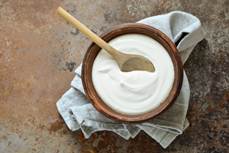
3. Cultured dairy products can be leftovers from a process (buttermilk) or soured like maas/inkomazi. Yoghurt is cultivated from full or low fat milk and can be plain or sweetened.
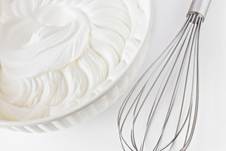
4. Cream will vary in thickness depending on the content of butterfat.
- Fresh or pouring cream(which is not good for whipping) can be used with desserts
- Single cream is viscous and used in savoury dishes (it is good for whipping)
- Double cream is thick, high in fat and great for whipping
- Sour, cultured cream is used in cooking.
- Creme-fraiche can be used in sauces or spreads.
- Man-made, synthetic creams are made from vegetable or soy products.
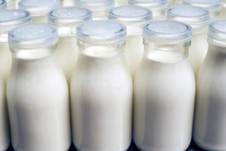
5. Milk is available in a wide variety of types, as defined by the fat content.
- Full cream is untouched with a fat content of at least 3.5%.
- Skimmed or fat free milk is less than 0.5% fat.
- Low-fat milk is anything in-between 0.5 and 3.5%.
Most milk products are pasteurised for safety and storage purposes with other processes, like homogenisation (great for catering) and UHT (Ultra-Heat-Treated, aka long life), helping to enhance and prolong the life of the product. Other milk products, like evaporated milk, condensed milk (with added sugar) and powdered milk go through further processing.
3. Uses of dairy
- - with breakfast cereals (milk, yoghurt)
- - being part of or accompanying desserts (cream)
- - as a topping on food or in a salad (cheese)
- - as a cooking oil (butter)
- - as a drink (milk, mass/inkomazi)
4. Cooking and the effects of heating dairy
Diary is a flexible ingredient and when cooked, its taste, appearance and consistency will change.
Milk and cream thicken and get sweeter as water evaporates and sugars caramelise. When heated aggressively, cream can separate.
The proteins found in cheese, on the other hand, will harden and the fat will separate or 'cook out' from it. Cheeses react differently – they melt faster or offer differing strengths of flavours (older the stronger) - when added to food. When melting cheese in the final stages of food preparation, temperatures need to be low and timings need to be short in order to preserve flavours.