Kitchen Hygiene
| Site: | DBECloud |
| Course: | Grade 10 e-Hospitality Studies |
| Book: | Kitchen Hygiene |
| Printed by: | Guest user |
| Date: | Thursday, 22 October 2026, 12:37 PM |
Description
1. Introduction
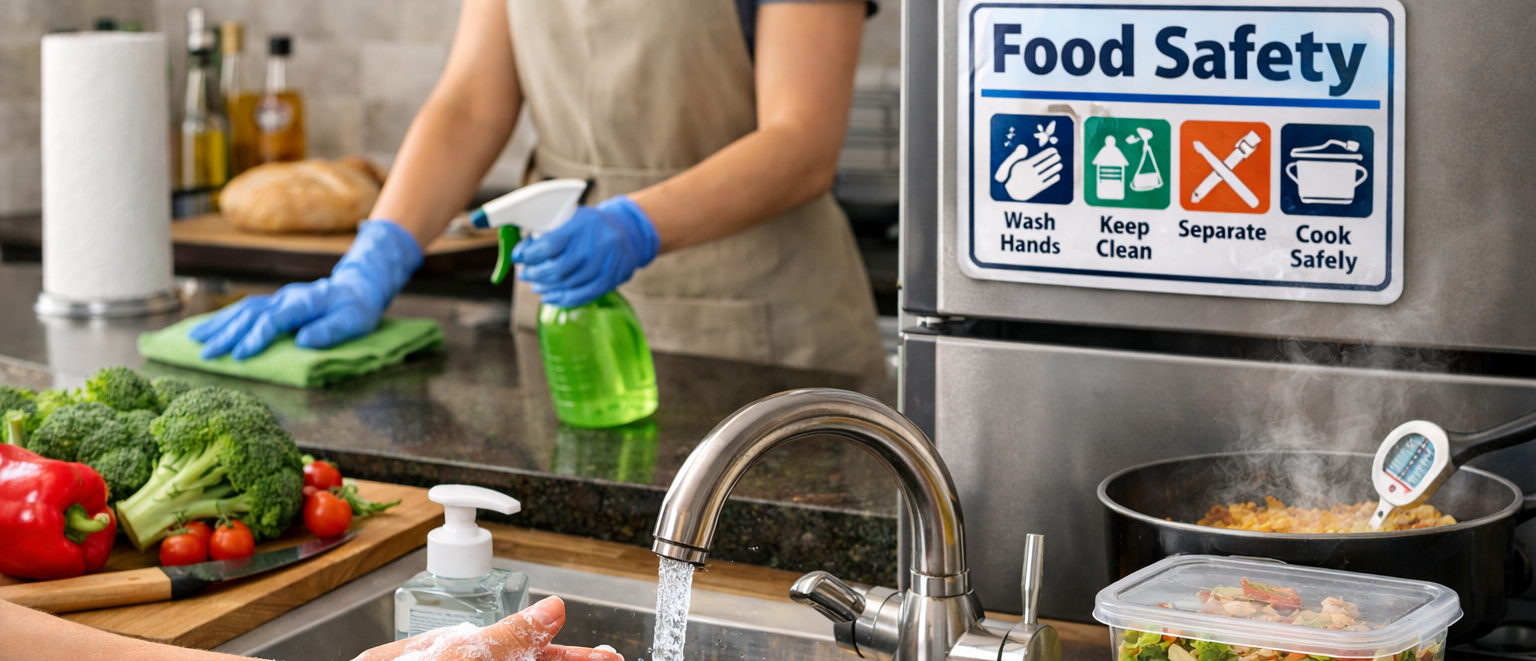
In order to prevent the spread of germs and disease, it’s important that the environment in which food is prepared is kept clean and tidy. Poor standards of hygiene can assist harmful bacteria in spreading around the kitchen which may contaminate food and lead to serious outbreaks of food poisoning.
Legal
Everyone working within the hospitality industry needs to be aware of the Responsible Occupational Health and Safety Act which was written by the South African government to ensure that workers’ rights, in terms of health and safety, are protected.
1.1. Kitechen hygiene
Uniform
Anyone working in a kitchen needs to ensure that they are appropriately dressed. Chef’s uniforms are specially designed for cooking – they help to protect against heat and spills, prevent hair and perspiration from falling into the food and offer a decent level of comfort and safety in moving around.
Culinary Hygiene Practices
1. Personal Hygiene
Every person that works in a kitchen needs to ensure that they maintain a high level of personal hygiene. This includes…
- regular washing and sanitizing of hands (especially after handling raw meat, disposing of waste, going to the bathroom, sneezing or coughing, smoking, and eating or drinking)
- keeping nails short and dirt-free
- daily bathing/showering
- avoiding make-up
- ensuring all abrasions and open wounds are properly bandaged
- using a tissue to cover one’s mouth when sneezing or coughing
- never handling food when feeling ill
- using a clean spoon to taste food while it is cooking
2. Washing, cleaning and sanitary
Germs thrive in dirty surroundings, so it’s important to make sure that a kitchen and everything in it, is kept clean. This includes…
- washing hands regularly and thoroughly
- wiping down kitchen counter-tops before and after preparing food on them
- regularly sweeping and mopping kitchen floors
- properly soaking, rinsing and sanitizing washing kitchen utensils and cooking-ware after each use
- air-drying or using disposable paper towels to dry hands, equipment and surfaces (re-usable towels should be avoided as bacteria thrives in damp places)
- following the manufacturer’s instructions to clean kitchen appliances
- knowing which cleaning agent should be used under which circumstance
- using air-fresheners to remove foul odors
3. Waste Disposal
A lot of refuse comes out of the kitchen, either in the form of off-cuts and leftover food (wet waste) or as the packaging that the food was originally presented in (dry waste). Responsible waste disposal ensures that…
- all waste is disposed of as soon as possible
- wet waste is properly drained before being disposed of in order to prevent food from rotting and odors from forming
- dry waste (paper, glass, plastic and metal) is properly sorted before being disposed of so that it can be efficiently recycled
- areas used for waste disposal are located outside and away from the kitchen, and are cleaned regularly
- rubbish bins are fitted with industrial strength bin-liners and have secure lids that are kept closed at all times to prevent flies and other pests from being able to get to the waste inside
4. Pest Prevention
Dirty kitchens attract a wide range of kitchen pests like flies, cockroaches, mice and rats. These pests pose a serious threat in terms of food contamination (with germs being carried on their bodies or found in their droppings), and can cause a significant amount of property damage in the long run.
In order to prevent pests from coming into the kitchen, it is important to keep food securely sealed and to ensure that waste is not exposed. To get rid of pests, hand-held aerosol sprays or special electronic devices can be used. It is recommended that professional pest control services – who use special pesticides - are called in to eradicate more serious pest (often by means of finding droppings, chewed packaging and wiring, or their nests)
- rodents (such as rats and mice), which thrive in dark areas, are known to chew through materials and distribute harmful germs and bacteria through their droppings and urine
- cockroaches, which live in drains and other dark and damp environments, come looking for food when the kitchen lights go out
- ants usually live outside and make their way inside when in search of food. Their tiny bodies can transfer germs as they march across kitchen surfaces
- weevils and moths use dry foods (such as flours, cereals and grains) to lay their eggs and rear their larvae – they are not likely to cause any serious food contamination outbreaks but should be removed so as to prevent further food from being spoiled
- flies pose a significant risk in the kitchen - they transfer germs and bacteria as the fly between pieces of exposed food, on which they feed and lay their eggs
- bees, wasps and fruit-flies do not necessarily cause food contamination but they can still play a role in spoiling food or stinging workers (which could be very serious for those who are allergic)
5. Food Storage
In order to prevent food from spoiling and contributing to possible out-breaks of food poisoning, food needs to be stored in the correct manner.
Cold storage is used to store fresh and perishable items in refrigerators (approximately 2-5°C), freezers (approximately -18°C, or less) or cold rooms. When using cold storage, food should always be …
- sufficiently packaged (either wrapped up or stored in a container) to prevent leaking and odors, and possible spoiling from freezer burn
- clearly labeled with the contents and the date it was stored (particularly for freezer food which may be hard to identify when frozen)
- organized (e.g. allocating dairy products to one shelf, meat to another, etc)
- kept spacious to ensure sufficient air circulation between items
Dry storage is used to store food items at room temperature in cupboards or pantries. Dry storage should always…
- be kept clean
- be well-ventilated
- be properly sealed (i.e. with screens over openings, and no cracks that could allow pests to enter)
- be set up so that food is not pressed against the wall or the floor
- have similar foods stored together (and in alphabetical order for easy retrieval)
- be regularly reviewed to ensure that products have not expired
Waste Management Rules
Looking after the environment is a top priority. Make sure you follow the 3 R’s of responsible
waste management…
Reduce
- drive down the amount of waste by simply using less
- choose products with less packaging or buy in bulk to reduce the overall amount of packaging used
- make use of rechargeable and refillable products
- avoid using cling-wrap, aluminum foil and other single-use materials
Re-Use
- wash, dry and keep anything that can be used after its initial purpose has been served
- re-use containers – like jars and bags - for storing other items of food instead of throwing them out
- collect and distribute items that may be useful to other people and organizations (like schools)
- try to fix things before throwing them away and having to buy new
Recycle
- sort dry waste into similar types of materials (i.e. organic matter, paper, plastic, glass and metal)
- make use of specially marked collection bins to dispose of the different types of materials
- always buy and use recycled products where you can